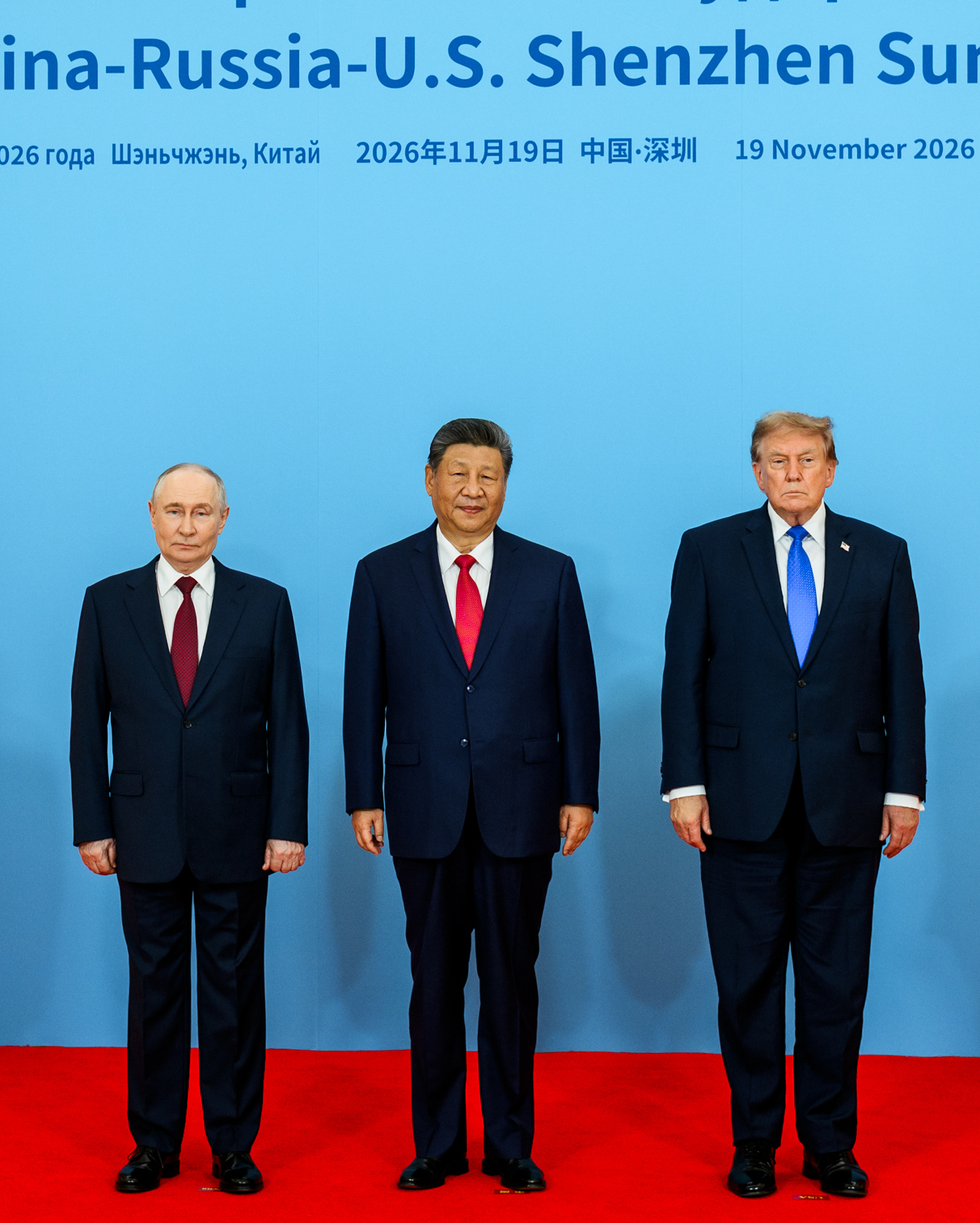
The Shenzhen Summit: A Photograph of Unity, a Declaration of Limits
EDITORIAL: The November 19 summit in Shenzhen, bringing together the leaders of the United States, China and Russia, was historic in its format. Donald Trump, Xi Jinping and Vladimir Putin appearing together offered a powerful image of three major powers willing to engage in direct dialogue at a time when international relations remain deeply divided.
The photograph itself carried a message. Despite their differences, competing interests and disagreements over global affairs, the leaders were prepared to sit together and discuss the future of international relations.
But a photograph of unity should not be mistaken for an agreement on the world’s problems.
The summit demonstrated the importance of dialogue among major powers. Yet it also exposed the limitations of diplomacy when broad declarations are not supported by specific commitments, implementation mechanisms and measurable outcomes.
The world needs more than meetings between powerful leaders. It needs solutions to problems that continue to threaten international peace and stability.
Dialogue is important, but what follows?
There is no question that dialogue between the United States, China and Russia is necessary. Their political, economic and military influence extends far beyond their respective borders. Decisions taken by these countries can affect the security and economic interests of nations across the world.
At a time when international tensions are rising, direct communication between their leaders can help prevent misunderstandings and reduce the possibility of confrontation.
However, dialogue should not become an end in itself.
The important question is what the three leaders have agreed to do after the summit. What commitments have they made? What mechanisms will ensure that those commitments are implemented? And how will the international community assess whether the meeting has produced any meaningful results?
Without answers to these questions, the summit risks becoming another diplomatic occasion remembered more for its symbolism than its achievements.
The conflicts that remain unresolved
The continuing war in Ukraine and tensions surrounding Iran remain among the major challenges to international peace and security.
These issues cannot be addressed simply through general statements about cooperation and stability. They require difficult political decisions, mutual understanding and a willingness to address the concerns of all parties involved.
The United States, China and Russia have considerable influence over the international environment in which these conflicts are unfolding. Their ability to communicate is therefore important.
But influence also brings responsibility.
The international community will naturally expect these three powers to use their positions to reduce tensions rather than deepen existing divisions.
Peace cannot be achieved by ignoring difficult questions. Nor can it be secured by declarations that leave the underlying disagreements untouched.
Nuclear security cannot be overlooked
One of the most serious concerns facing the world is the danger of nuclear confrontation.
The possession of nuclear weapons by major powers makes their relationship particularly important. Miscalculations, political hostility or military escalation could have consequences far beyond the countries directly involved.
The three leaders therefore have a responsibility to maintain communication, avoid unnecessary confrontation and explore practical ways of reducing nuclear risks.
Nuclear security should not be treated as a secondary subject in discussions about global stability.
The world has already witnessed the destructive consequences of war. It cannot afford another major-power confrontation involving nuclear weapons.
Energy and economic security
Energy security is another area where cooperation among major powers matters.
International energy markets are interconnected. Political tensions, conflicts and economic restrictions can affect supplies, prices and the development prospects of countries far removed from the immediate disputes.
Developing countries are particularly vulnerable to such disruptions.
The three major powers have the capacity to influence global economic conditions. Their decisions should therefore take into account not only their own national interests but also the consequences for countries with fewer economic and political resources.
International cooperation must produce benefits beyond the negotiating tables of powerful nations.
The United Nations and the voice of smaller nations
The summit also raises a larger question about the existing international order.
The United Nations was established to provide a platform where countries, irrespective of their size or military strength, could participate in discussions on international peace and security.
Yet the present international system continues to reflect the unequal distribution of power among nations.
Major powers naturally have greater influence over international decisions. But that influence should not come at the expense of smaller countries.
Reform of the United Nations and its institutions remains an important subject. International peace cannot be sustained if the concerns of smaller nations are overlooked or if decisions affecting them are taken without adequate consideration of their interests.
The three leaders should recognise that global leadership carries responsibilities beyond their own national boundaries.
Unity must be followed by action
The Shenzhen summit has demonstrated that dialogue among major powers remains possible despite their differences.
That is a positive development.
However, the international community should judge the meeting not simply by the statements made or the images presented to the world, but by what follows.
There must be measurable progress on international security, nuclear risks, energy cooperation and the broader challenges facing the United Nations.
The leaders must also demonstrate that their willingness to engage with one another extends to addressing the concerns of countries that do not possess comparable political, economic or military influence.
A world order cannot be stable if it serves only the interests of the powerful.
The summit has provided an opportunity. Whether that opportunity will produce meaningful change remains to be seen. The real test of the summit will not be how warmly the three leaders greeted one another, but whether their meeting makes the world safer, more stable and more just.