South Korea education minister resigns after AI cheating scandal engulfs university exams
Choi Kyo-jin says he ‘failed to prepare adequately’ for entrance exams, which this year had phones banned and checks for cameras hidden in clothing
Angelique Chrisafis and agencies
South Korea’s education minister has resigned after an AI-assisted cheating scandal that erupted in the lead-up to key university entrance exams last week.
The country has been gripped by fears of AI-assisted exam cheating since last Sunday, when the top scorer in a national tax accountancy exam confessed to using a miniature camera and smartphone to achieve a near-perfect score, just four days before the crucial university entrance exam, known as the suneung.
The cheat’s confession sent officials scrambling to roll out a slew of preventive measures for the university entrance exams, including blocking public wifi in testing areas.
The unprecedented crackdown included doubling the number of supervisors and sending emergency alerts to detect any smartphones illegally smuggled into the exam centres.
Students were also told to turn up with pencils only. Erasers were provided by the test centres, as authorities tried to reduce the chances of concealed digital devices disguised as stationery.
In addition, exam-takers were asked to avoid wearing clothes with buttons. Those who failed to comply were told they would have stickers placed over the buttons to prevent the use of hidden cameras.
The government promised a reward of at least $75,000 (£57,300) for anyone reporting cheating or misconduct, with reduced penalties for those who turned in their accomplices.
But the education minister, Choi Kyo-jin, struggled to reassure the public, and teachers’ unions criticised the government response as belated.
“The exam concluded without any major incidents … However, as the minister in charge, I do not believe I am immune from public criticism that we failed to prepare adequately in advance,” Choi wrote on X. “Now that the exam is over, I take full responsibility and hereby offer my resignation.”
The president, Lee Jae Myung, accepted his resignation, the presidential office said.
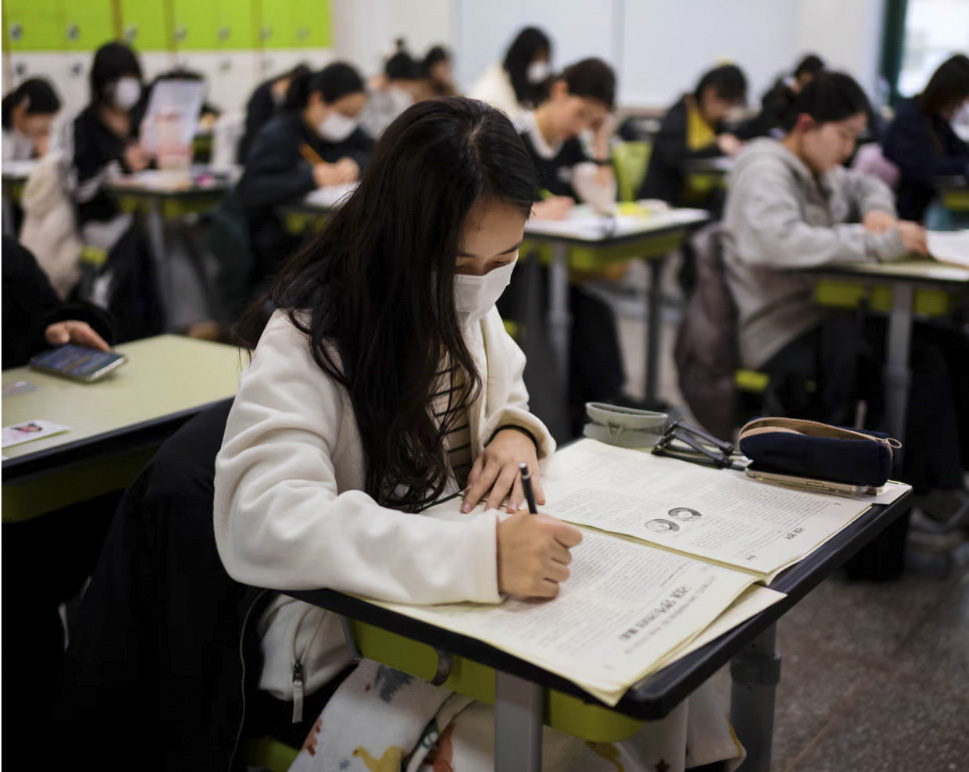
The annual, eight-hour suneung determines which university a candidate can attend and, in turn, their future prospects. It is widely seen as a ticket to prestigious universities, well-paid jobs and even better marriage prospects in the highly competitive country.
Asked during a parliamentary hearing on Monday whether he was confident that authorities could catch would-be cheaters on exam day, Choi, 72, replied: “Due to my age, I am not confident I could.” His response quickly drew a public backlash.
Choi did not appear at press conferences in the days leading up to Thursday’s exam, and a vice-minister instead announced the preventive measures.
The person who cheated in the national tax accountancy exam said in a video posted to his lawyer’s YouTube account that he had photographed the questions with a concealed micro-camera, sent them to an AI system and read the answers from a smartphone. “I cheated in the tax accountant exam,” he said. “My top placing is not the result of legitimate effort.”
The scandal has rattled a country where standardised tests largely dictate social mobility and career trajectories.
South Korea goes to great lengths to ensure the smooth running of the suneung. Aircraft takeoffs and landings are rescheduled during the 25-minute English listening paper to minimise noise, while artillery fire and tank movements are suspended. The stock market opens an hour late and cars are stopped 200 metres from every centre.
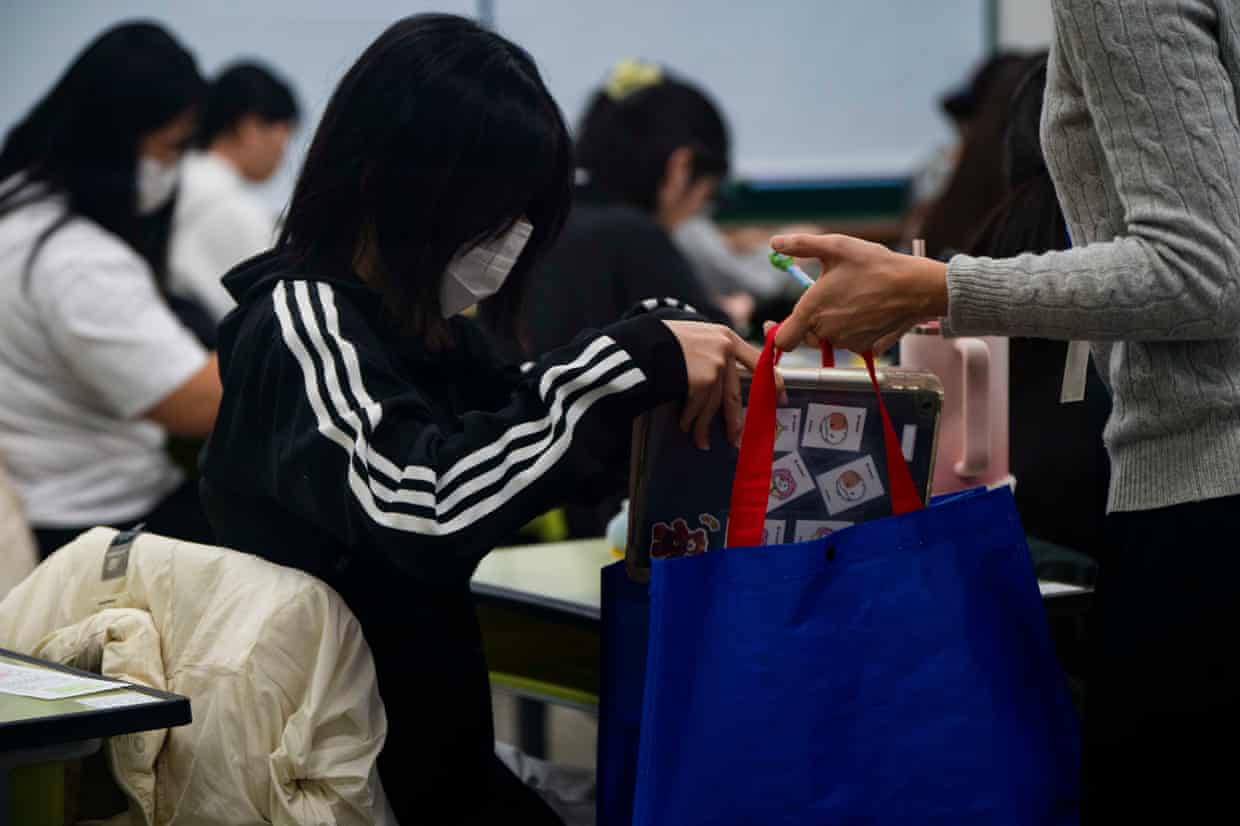
In the aftermath of the cheating scandal, the government announced that smart devices would have to be turned off and handed in for the suneung, while bags left in corridors would be checked for any devices that were still on. Exam officials also inspected all candidates’ glasses and watches, as well as their collars and sleeves for concealed cameras.
The government also sent emergency alerts to every phone in the country, which sounded at full volume and could not be silenced, in the hope of catching out anyone who had not handed in their device.
Officials said 111 cases of misconduct involving electronic devices were identified during Thursday’s exam, nearly half of which were detected through the emergency alerts.
A high-school student had filed a constitutional petition challenging the government’s decision to go ahead with the exam as planned. But a court rejected the request, citing insufficient evidence of irreparable harm.
Under the tightened measures, students caught cheating can be barred from retaking the exam for 10 years and face criminal prosecution.
With Agence France-Presse and Reuters