‘Produce a good result by any means’: how AI is testing South Korea’s exam obsession
South Korea has made exams a career-defining way to level the playing field, but AI has plunged the system into chaos
Raphael Rashid in Seoul
“I have never worn glasses in my life,” Yun Jeong-hu says to the camera, holding up a tax law textbook, and flipping through pages plastered with notes and dotted with highlighted sections.
In the 22-minute video, the 25-year-old talks viewers through his study methods, naming his tutors, describing watching recorded lectures until 3am, and solving a corporate tax question live and unrehearsed.
The first pair of glasses he ever put on, he says, was for a job interview, because he worried he looked too young.
Yun had posted the footage because he came second in South Korea’s national tax accountant exam, amid widespread claims circulating online that the exam’s high scorers had cheated by using AI smartglasses.
In other recent exams, successful candidates posted images of used-up pen refills and annotated textbooks to prove they had studied. One noted they had had laser eye surgery two years earlier, preempting any suggestion they would use smartglasses.
“It’s truly deplorable to see the hard work of everyone preparing for or passing exams of any kind being disparaged,” Yun wrote under his video, asking people to stop spreading groundless speculation.
Claims of cheating are a regular fact of life in South Korea, which places such career-defining emphasis on exams, but this year they have been turbocharged by the opportunities that AI affords.
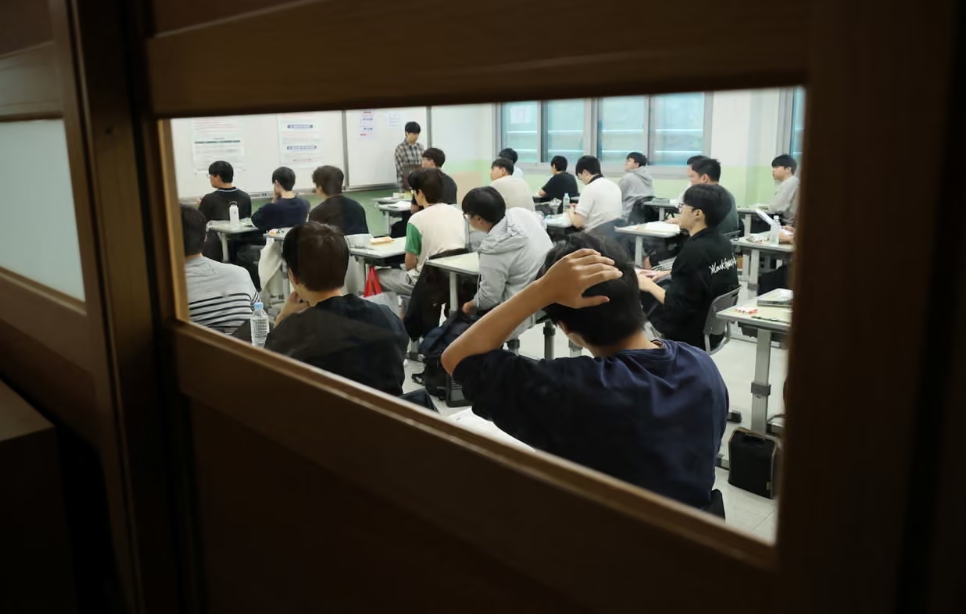
Last week, officials sent alerts normally reserved for air raids and nuclear attacks to every phone in the country in a bid to root out cheats smuggling in a device to the suneung, the gruelling eight-hour university entrance exam. The education ministry said 111 candidates were caught with electronic devices, of whom 54 were exposed by the alerts themselves.

The country’s leaders has been grappling with the new tech challenge: president Lee Jae Myung promised a reward of at least 100m won ($74,000) for successful tipoffs about cheating. On Sunday, South Korea’s education minister, Choi Kyo-jin, resigned amid the disruption caused by last-minute changes brought in to tackle AI-assisted cheating in the suneung.
“Because a single test determines a lifetime’s economic position and social recognition, there is extreme pressure to produce a good result by any means,” says Sangchin Chun, a professor of sociology at Sogang University, adding exams have become mythologised as “the only remaining bastion of fairness”.
That extreme pressure took a dark turn this month. One man who scored full marks in a recent national law school admission exam was accused of using AI. He had said he would answer his critics by publicly answering part of this year’s suneung in real time but he never appeared at the event last week. He was later found dead in a Seoul motel. The allegations against him had not been established.
A financial crisis, a scandal and the ultimate equaliser
The roots of South Korea’s exam obsession lie partly in the economic insecurity that followed the 1997 Asian financial crisis, says Kim Dong-chun, a sociologist and author of a study of South Korea’s exam meritocracy.
Family wealth and connections had long shaped who gets ahead in South Korea, but as job security became harder to find, exams became the accepted way of allocating shrinking opportunities, he argues, because no other procedure felt fair.
In 2019, the then justice minister, Cho Kuk, became embroiled in a scandal – and was later jailed – for forging academic credentials to get his children into prestigious schools and universities.
Once again, exams were seen as a way to level the playing field, and the Cho scandal prompted the government to press major universities in Seoul to allocate at least 40% of their places on the basis of entrance exam scores.
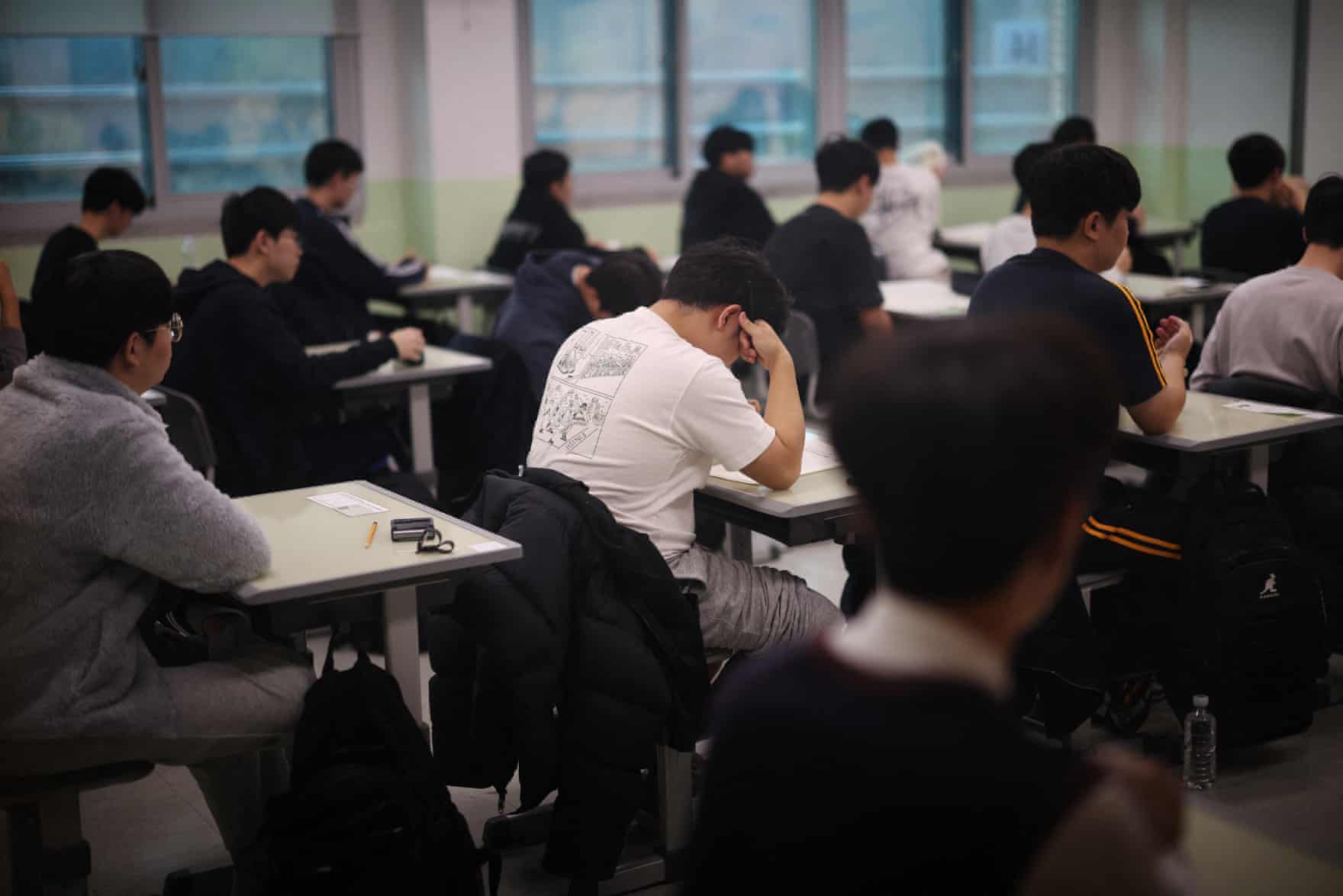
Choi Hang-seop, a professor of sociology at Kookmin University, told Yonhap news agency that South Korea had truly become a survival-of-the-fittest society, one that is harsh on those who fall slightly short and one in which people come to believe that doing well in the suneung or a state exam is the only way to survive.
Amid fears that essay coaching could favour wealthier families, the suneung university exam is almost entirely multiple choice and marked by machine, with no essay, interview or coursework. It is treated as the ultimate equaliser: the one place where everybody sits the same paper at the same time, anonymously.
However, reformers have long argued that the exam’s format is the problem. In August, the national education commission’s chair, Cha Jeong-in, said multiple choice had reached its limits and essay assessment was unavoidable, but the commission could not agree and the plan was pushed back. A redesign of the suneung is already under way for 2028, but the multi-choice format itself will be unchanged.
Chun says a system of assessment built around memorisation and problem-solving had been overtaken by the AI technology now in candidates’ hands and that the cheating had flourished in the gap.
The debate over how to respond, he says, remains focused either on stricter invigilation and punishment or on modernising the system through computer-based testing.
Belief in the myth of meritocracy remains firm, he says, along with the pride in the idea that “the examination republic is still the best there is”.
Park Do-soon, who led the design of the suneung and became the first head of the body that runs it, is no longer convinced. “I don’t see any reason for humans to sit the kind of exam where AI can get the answer in one go”, he told Hankook Ilbo.