NAGAS MUST TELL THEIR OWN STORIES TO THE WORLD: ABU METHA AT NAGALAND LITERATURE FESTIVAL 2026
KOHIMA, October 31 (NEPS): The sixth edition of the Nagaland Literature Festival (NLF) 2026 concluded today with a call to preserve Naga stories, cultural identity and literary traditions while adapting to changing times.
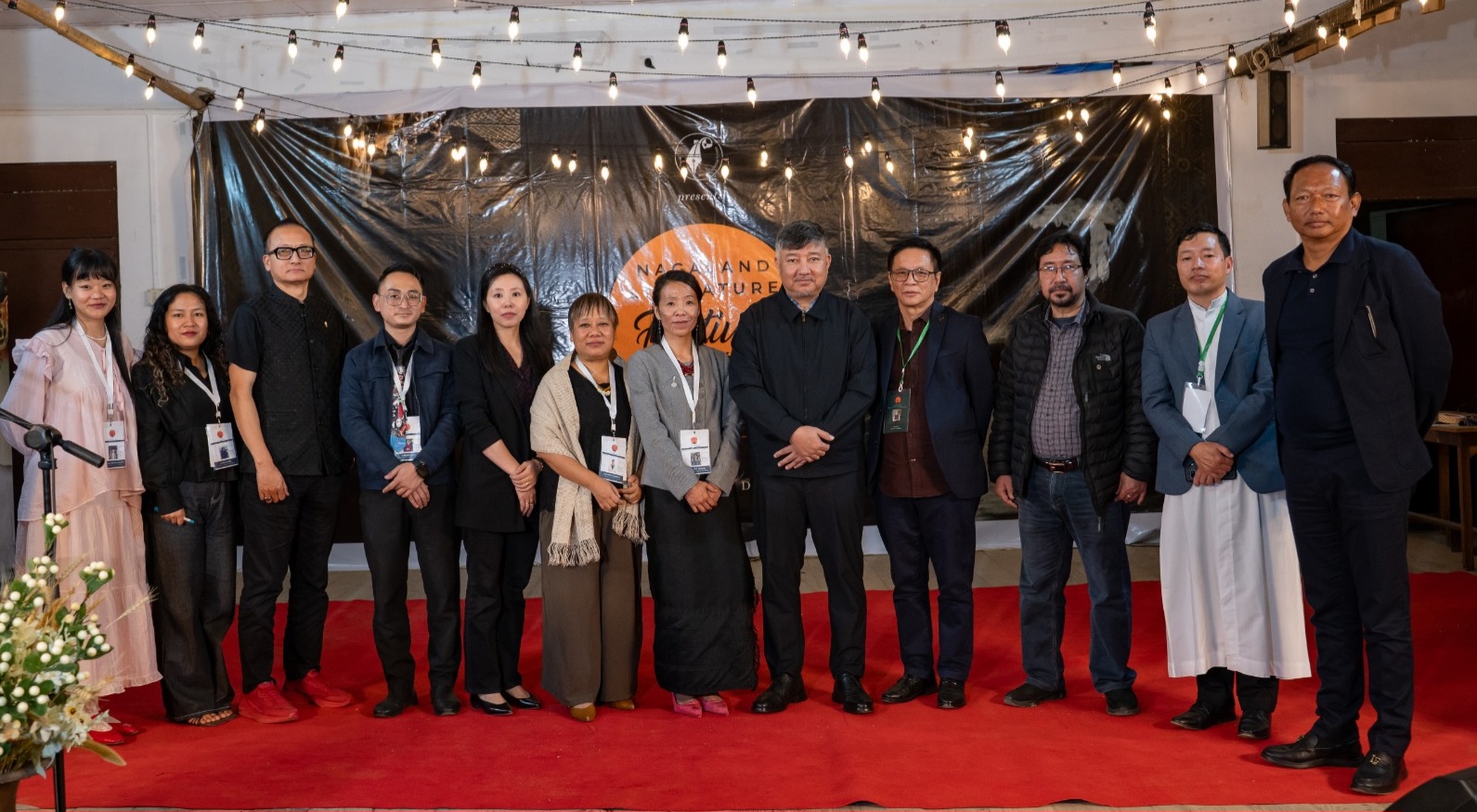
The two-day festival, organised under the theme “From Hearth to Page” at the DBHSS Auditorium, Kohima, brought together writers, storytellers and literary communities from across Nagaland.
Winners of the NLF Short Story, Poetry and Essay Prizes were also announced. Amenla I Chang won the Short Story Prize for “Apang”; Temjenwapang received the Poetry Prize for “I Taste My Ashes”; and Atino Yeptho won the Essay Prize for “Hearth to Page.”
The second day featured an oral storytelling session titled “Where I Came From,” presented by Salew Adani and Limawati Longchar. Abokali Jimomi also held a conversation with Molona Wati Longchar on “From Hearth to Page: Writing for Naga Children.”
Another session, “What I Heard; What I Wrote: Voices from Then and Now,” featured Kuvethilu Thuluo, Temjenwapang Jamir, Albert Seluokuolie Rutsa, Bobita Rai, Dili Khekho and Kevilenuo Roselyn Miachieo.
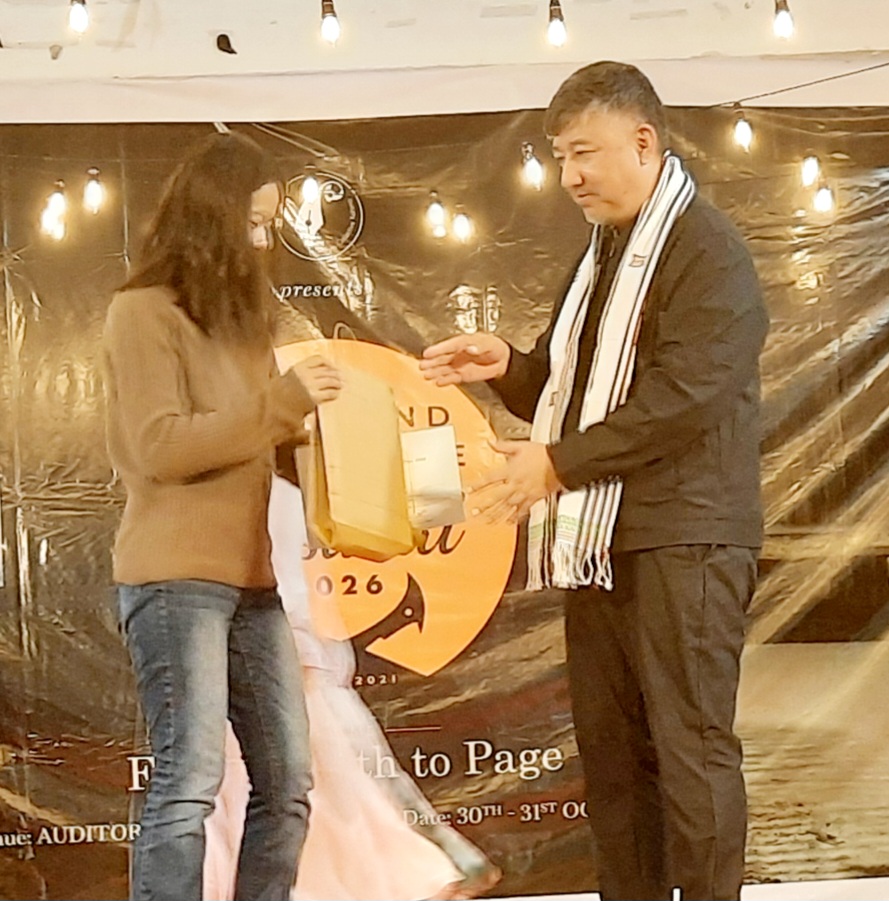
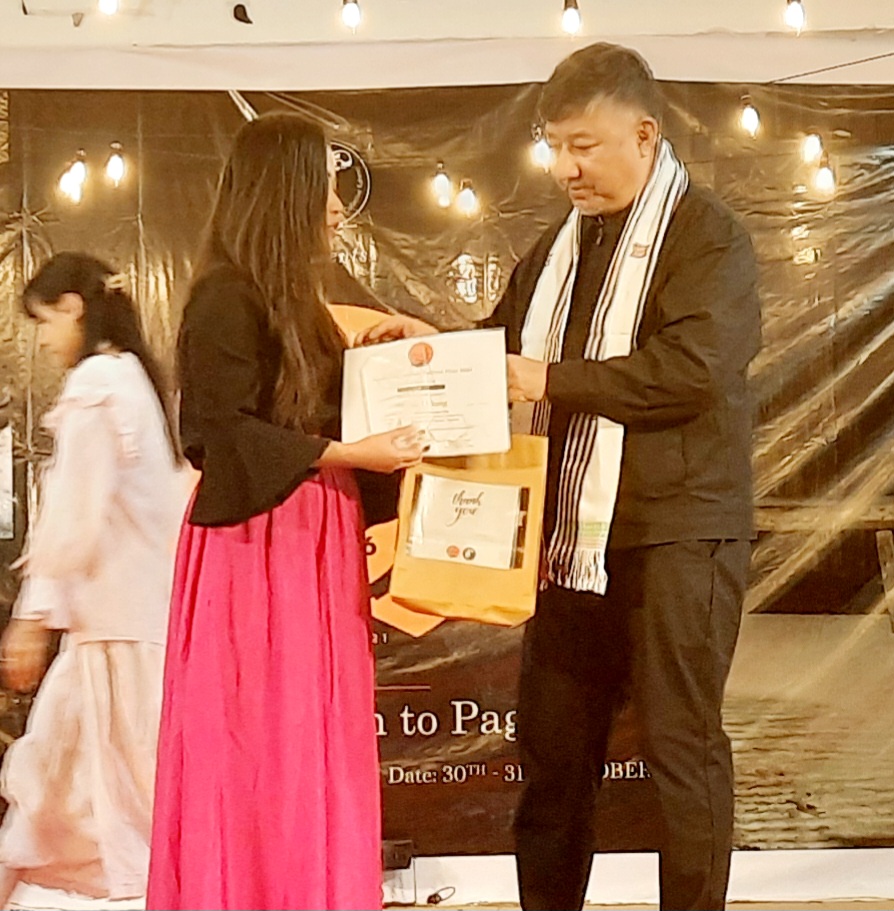
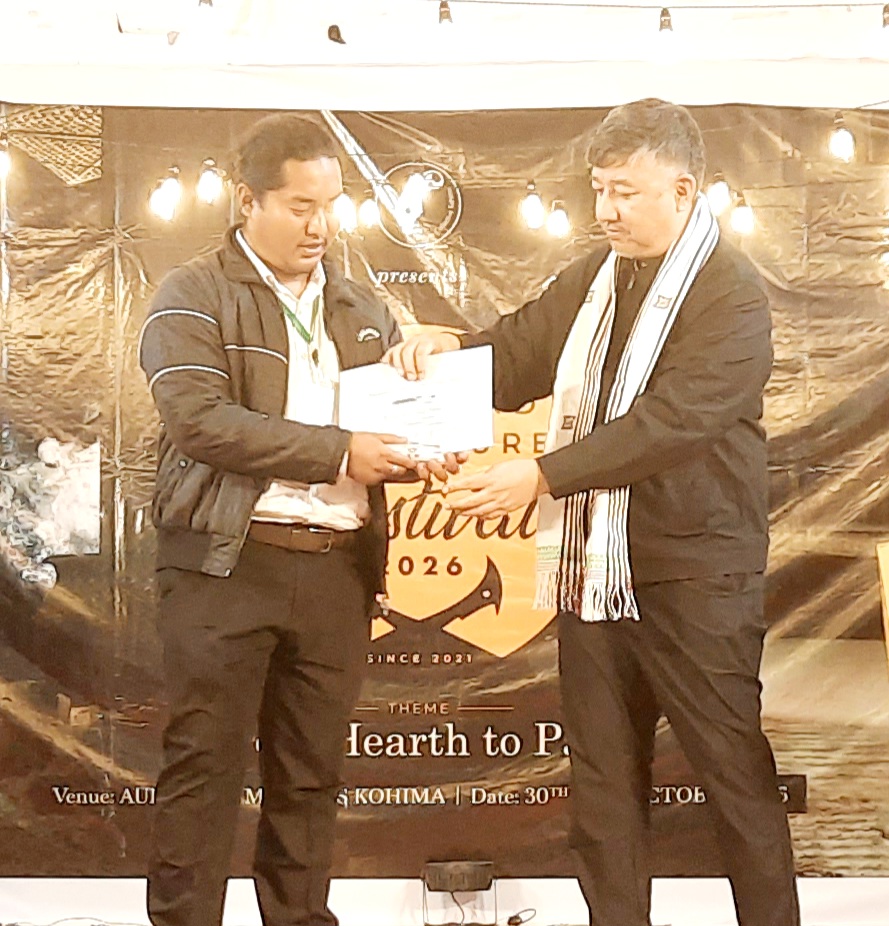
Winners of the NLF Short Story, Poetry and Essay Prizes – Amenla I Chang, Temjenwapang and Atino Yeptho receiving Prizes from the Special Guest, Abu Metha, at the Closing Function of the 6th Edition of the Nagaland Literature Festival 2026 held at the DBHSS Auditorium, Kohima, on 31 October 2026.
Congratulating the prize winners and participants, Special Guest Abu Metha, Advisor to the Chief Minister, Government of Nagaland, and Chairman of the Investment & Development Authority of Nagaland (IDAN), urged Naga writers, artists and young people to take ownership of their narratives and carry the state’s stories, languages and cultural heritage to a global audience.
Describing “From Hearth to Page” as a theme that resonated with everyone, Metha said the Naga people had preserved their history, identity and way of life through oral traditions for generations.
“In those stories is our history, our tradition, our legacy,” he said, adding that documenting them gives them permanence and enables them to reach a wider audience.
He stressed that literature, language and storytelling must work together to preserve Naga identity. “When we lose a language, we lose an entire history, tradition and legacy,” he said.
While English could help Naga stories reach a wider audience, Metha emphasised that indigenous languages must be protected to safeguard the community’s inner voice.
On artificial intelligence, he encouraged young people to use technology for research, translation, preservation and the wider dissemination of knowledge, but cautioned against compromising originality.
“We must not surrender our human voice,” he said.
Observing that others had, for too long, written about, represented or misrepresented the Naga people, Metha called on Nagas to take charge of their own narratives.
“Today, we must tell our own stories from the Naga context and from our perspective,” he said.
He maintained that stories told by Naga writers themselves would be more authentic, honest and better appreciated internationally.
Metha further said literature, poetry, cinema and documentaries could communicate Naga aspirations for honour, respect and genuine peace, while generating greater goodwill and support from the international community.
Encouraging writers to persist despite the financial and creative challenges of the profession, he said their contributions would outlive them.
“Physically, you may go, but your story, your work and your contribution will live forever,” he said.
He assured continued government support for the shared aspiration of taking Naga literature, culture and stories to the international stage.
Expressing hope that the Nagaland Literature Festival would grow into an international intellectual property of the Naga people, Metha said the state should aspire to achieve the scale and recognition of established literary festivals.
“If the Jaipur Literature Festival can be so big, I think we can also be as big, if not bigger, in the years ahead,” he said.
Delivering the closing remarks, Vizovono Elizabeth, General Secretary of Writers Collective, said Naga society was undergoing rapid transition and must ensure that modernity did not come at the cost of losing its roots, stories and cultural heritage.
Reflecting on the festival theme, Elizabeth said “From Hearth to Page” was conceived to explore ways of sustaining, continuing and reinventing traditional stories through contemporary forms of expression.
She observed that the practice of sharing stories around the kitchen hearth was gradually disappearing as families found fewer opportunities to gather. However, she stressed that changing times should not mean allowing those stories to disappear.
“Humans have always learnt to adapt to their environment,” she said, drawing a parallel between the traditional hearth and the digital presentations featured at the festival.
Describing the passion for storytelling as the real fire that must remain alive, Elizabeth emphasised the importance of preserving cultural foundations while embracing new platforms and opportunities.
She also called for greater engagement and connection within Naga society, cautioning that the community risked losing its identity if people failed to listen to one another, share experiences and preserve collective memories.
“You can only break the rules if you learn them first,” she said, stressing the importance of building a strong foundation before moving forward.
The two-day festival featured panel discussions, literary talks, interactions with writers and storytellers, artwork exhibitions and film screenings in collaboration with TakeOne Production House. Four books were also released during the event.
Describing the edition as a significant milestone for Writers Collective, Elizabeth said the organisation was established to provide a platform for Naga literature to grow, ensure local stories were not left behind and amplify the voices of those whose memories had preserved the community’s narratives.
She acknowledged that Nagaland’s literary community remained relatively small but was passionate and vibrant. She credited individuals, government departments, institutions, volunteers and other partners for making the event possible.
Elizabeth extended special appreciation to guests Dr Kekhriye Whome and Abu Metha. She particularly acknowledged Metha’s vision and encouragement, saying his prompting had led to the formation of Writers Collective.
She also thanked chairperson Vishü Rita Krocha, who is President of Writers Collective, Kohima, along with speakers, participants, performers, moderators, volunteers, educational institutions, media organisations and the wider literary community.
The festival also featured a book fair and an exhibition showcasing homegrown products and artworks reflecting the creativity and talent of young Nagas.