DEPARTMENT OF HEALTH & FAMILY WELFARE & GIRL EFFECT INDIA LAUNCHES ‘TEEKA TALK’
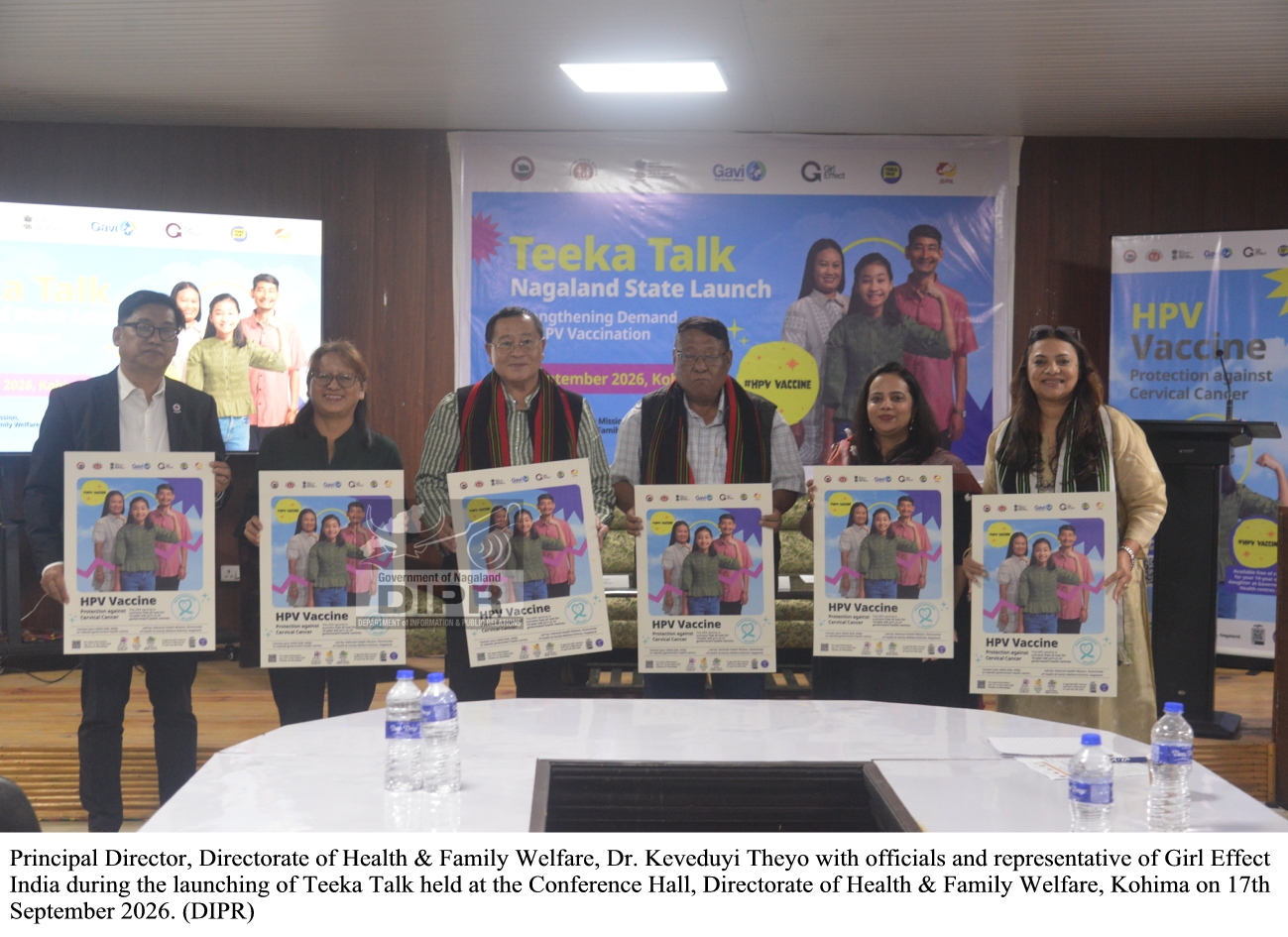
KOHIMA, SEPTEMBER 17: The Department of Health & Family Welfare, Nagaland, in collaboration with Girl Effect India, launched ‘Teeka Talk’, an initiative aimed at strengthening awareness and engagement around Human Papillomavirus (HPV) vaccination and prevention of cervical cancer.
The initiative was launched at the Conference Hall of the Directorate of Health & Family Welfare, Kohima, during a state-level meeting chaired by Principal Director, Directorate of Health & Family Welfare, Dr. Keveduyi Theyo, on September 17, 2026. The meeting brought together more than 60 stakeholders from the Health, Education and Women and Child Development (WCD) departments.
Speaking at the launch, Dr. Keveduyi Theyo said Nagaland is committed to ensuring that adolescent girls and their families have access to accurate and trusted information on HPV vaccination so that they can make informed decisions about their health.
She emphasised that strengthening awareness requires close coordination among the Health, Education and WCD departments, along with meaningful engagement with schools, communities and frontline workers. She said the collaboration with Girl Effect India through Teeka Talk would help bring credible and youth-friendly information closer to girls and families across Nagaland.
State Immunization Officer, Directorate of Health and Family Welfare, Dr. Imkongtemsu Longchar, said cervical cancer remains an important public health concern among women in India, while HPV vaccination provides an opportunity to prevent the HPV infections that cause most cervical cancers.
He said providing adolescent girls and their families with the right information at the right time is essential to building confidence in HPV vaccination. Parents and caregivers, he added, are encouraged to support eligible girls in receiving the HPV vaccine at the recommended age.
Kavita Ayyagari, Director, Girl Effect India, said questions and concerns about vaccines are natural, particularly when a vaccine is new to families. She said Teeka Talk seeks to make trusted information on HPV vaccination easier to access and understand through schools, communities, parent engagement and digital platforms.
She also highlighted the importance of providing information in formats and languages suited to diverse communities, particularly in a state like Nagaland where communities are geographically dispersed.
Perspectives from Kohima and Dimapur districts informed discussions on implementation, while representatives from the Health, Education and WCD departments discussed opportunities to strengthen outreach across communities.
The next phase of the initiative will focus on coordinated implementation across departments and districts, with emphasis on school, parent and community engagement and ensuring that eligible adolescent girls and their families can access reliable information on HPV vaccination.
The Government of Nagaland is providing free HPV vaccination to girls aged 14 years at government health facilities. HPV vaccination can help prevent the HPV infections that cause most cervical cancers.
According to NCRP–ICMR 2024, cervical cancer is the second most common cancer among women in India, with 78,499 women diagnosed and 42,392 deaths reported. Vaccination at the recommended age provides an important opportunity to protect girls against cervical cancer later in life.
Teeka Talk complements these efforts by facilitating informed conversations on HPV vaccination among adolescents, parents and communities. Its WhatsApp-based chatbot provides clear and credible information and answers common questions about HPV vaccination and cervical cancer.
Girl Effect India is an independent non-profit organisation working to support adolescent girls and young women through health, education, economic opportunities, digital tools and trusted information. The organisation has been working in India since 2019 on adolescent health and wellbeing, including immunisation, mental wellbeing, anaemia, sexual and reproductive health and online gender-based violence.
Through locally rooted media, digital interventions, chatbots, dramas and youth-focused programmes, Girl Effect seeks to create safe and accessible spaces where girls can build knowledge, confidence and agency.
(Kazihito T Kibami, IA)