1.3 million flee, 2 dead, 500,000 displaced due to ‘Uwan’
Dominique Nicole Flores(Philstar.com
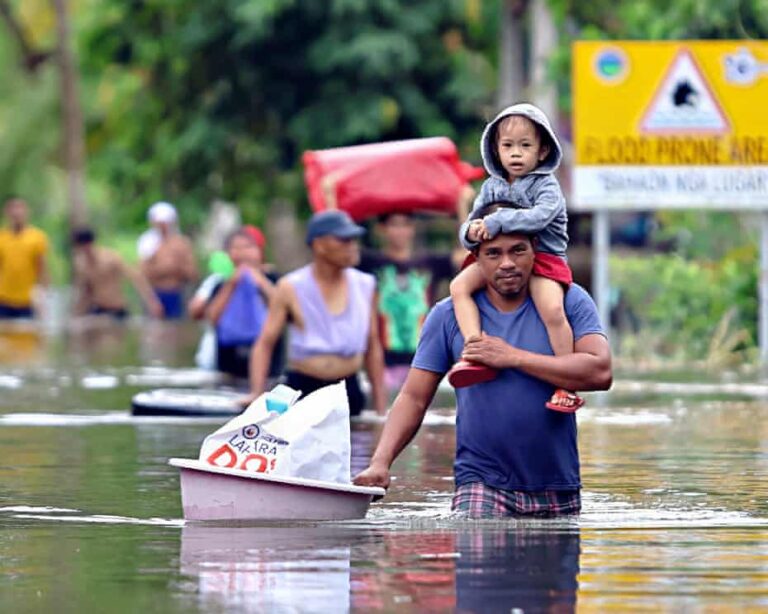
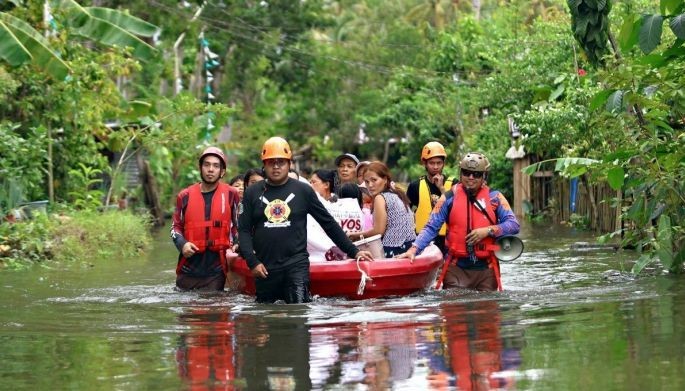
MANILA, Philippines — Typhoon Uwan’s relentless onslaught has left at least two people dead and two injured in the Philippines, with nearly half a million residents forced to flee their homes as of Monday, November 10.
According to the National Disaster Risk Reduction and Management Council (NDRRMC), more than 1.3 million individuals managed to seek shelter ahead of Typhoon Uwan’s landfall.
By Monday morning, 482,614 people had been displaced. Around three in five were already in evacuation centers, while others were served outside.
With 652,768 of the 836,572 affected individuals nationwide, Bicol Region was the hardest hit. It also reported the highest number of displaced families, most of whom are now in evacuation centers.
Of the two deaths reported, one was from Bicol while the other was from Eastern Visayas.
Typhoon Uwan also left 71 roads and 26 bridges impassable across eight regions, with major thoroughfares in the Bicol and Cagayan Valley regions among the most affected.
A total of 155 cities and municipalities lost power due to the typhoon’s strong winds and rains, including 74 in Calabarzon and 68 in Bicol. Electricity has so far been restored in only 15 areas.
Around 180 seaports also suspended trips amid rough sea conditions, leaving 6,190 passengers and 2,922 rolling cargoes stranded.
Initial assessments showed that 1,085 houses were partially damaged and 89 were totally destroyed, mostly in the Zamboanga Peninsula.
The government’s scale of preparedness sharply contrasts with Typhoon Tino, which saw fewer than 380,000 preemptive evacuations and over 600,000 displaced right after its onslaught.
Typhoon Tino’s death toll has also reportedly climbed to 224, based on data from the Office of Civil Defense (OCD). The NDRRMC’s latest report, however, lists 165 deaths and around 500 injured as of Monday.
OCD Deputy Administrator Bernardo Rafaelito Alejandro IV told ANC’s “Headstart” that early compliance with evacuation orders and voluntary evacuations may have helped improve the country’s preparedness for Uwan, especially after Tino’s impact.
PAGASA began monitoring Typhoon Uwan as early as last week while it was still outside the Philippine area of responsibility, and even as the country was still reeling from the damage caused by Typhoon Tino.
While casualties from Typhoon Uwan remain low, the number may still rise as the storm sweeps across the country and government agencies continue to assess the damage caused.
Wind Signal No. 4 remains raised over parts of Luzon as Typhoon Uwan, last tracked 135 kilometers west-northwest of Bacnotan, La Union, continues to move within the PAR. The typhoon is packing maximum sustained winds of 130 kph and gusts of up to 160 kph.
Forecasters expect it to strengthen again on Tuesday, November 11, as it moves across the West Philippine Sea before exiti